Tuesday, November 6, 2007

Nepal - The Annapurnas

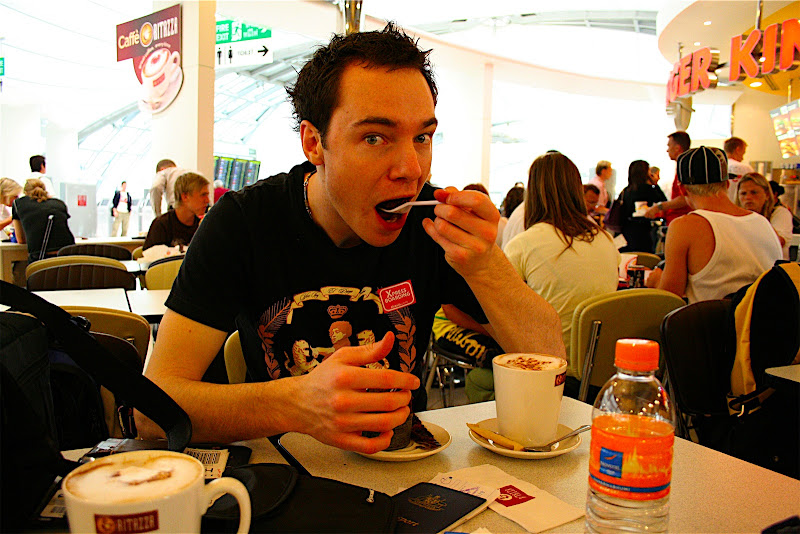
This is it, the end of the adventure. It's a bit sad really. I'm sitting in the café in Kathmandu where I wrote basically my whole audit 2 months ago; our episode in Pokhara and our trek finished.

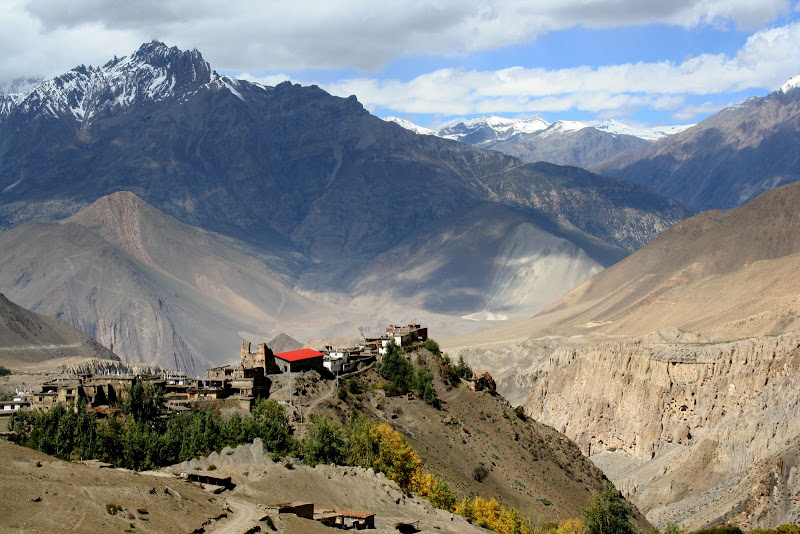
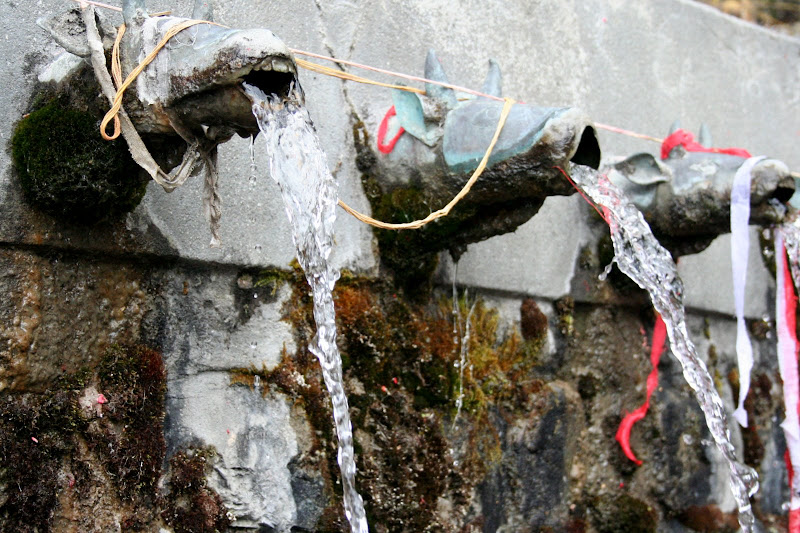
My elective ended early when I got fed up with learning nothing so geographically close to such awesome mountains and, with permission from concerned parties of course, Kel and I departed for Muktinath, one of the holiest places in both Hinduism and Buddhism. It boasts a unique earth-fire-water combo that is patently supernatural. It is the convergence of mountain with an icy stream and natural gas jets that produce a dubious "eternal flame". We didn't go there for the fire, which was lucky because while I wasn't expecting a Crown-Casino rivaling explosion of hydrocarbons from the ground, I was still a little disappointed by the pilot-light-sized spectacle sitting (mostly obscured) behind black chicken wire underneath statues of various Buddhas. It was okay, but I was hoping Hindudom (and/or Buddhadom) would hit me with more… Call me unappreciative if you will. I will say this unreservedly though: the mountain views were humbling.
Fortunately (or so one would have thought), having flown directly to Muktinath our trek was only just beginning, and there was plenty more on the itinerary. We were pumped for a week of great scenery, old historical villages, and a lot of exercise. The problem was that both of us started puking our guts up hours after arriving in Muktinath. This posed a problem because puking kills the motivation to enjoy just about anything, and the unpalatable kill-joy followed us like a desperate salesman for most of the next 3 days, alternately harassing one and then the other of us as we stumbled from town to town. I don't know if it was caused by altitude sickness or gastro, but I suspect on the basis of the full (unmentioned) symptomatology that is was gastro.

We soldiered on, and were just about better by the time we got to Marpha, the apple capital of the Himalayas. Kelly still had the runny nose that had plagued her since before we left home, and neither of us had the requisite appetite for full paced trekking, but we both really enjoyed Marpha, a very pretty and well organised town.
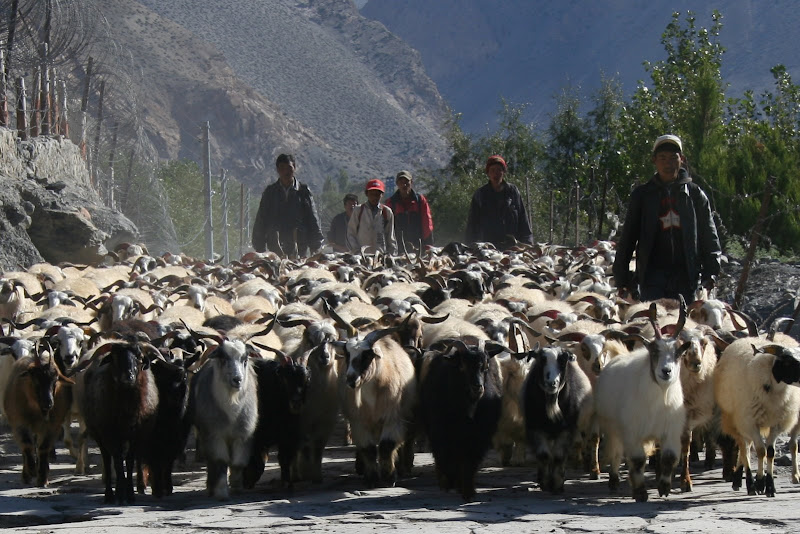
After a two more (long) days and treks we'd descended 1.5km (and that's net; it seemed we spent more time going up than down) and walked 45km horizontally, but we must have seen 30 waterfalls, navigated through dozens of landslides (which I found fun, if a little unnerving), passed through 15 or 20 unique and ancient villages, seen a thousand goats on the death-march to Pokhara, avoided being bowled over by troupe after troupe of heavily-laden and dogged ponies carting chocolate bars, pringles and mineral water to every conceivable corner of the Annapurna ranges (as long as foreigners can get there too!), and snapped 400 photos. It was a great couple of days, and ended up being the best we had on the journey…

We hit Tatopani, famous for its "luxurious" hotels and wonderful food (and that's by Annapurna circuit standards, I can assure you), and crashed for the night in relative comfort. At 2:00AM Kel woke up in agony with middle ear infections in both ears, and couldn't sleep. We hoped it would pass, but it didn't, so we were stuck in Tatopani for the whole next day, and Kel's ears were not getting any better. There was nothing I could do to help her either except hand-feed her paracetamol, since the health post was "closed for the festival" (yes, let's discuss what would happen if that health post was in Australia when I get back). The next night, Kel woke again at 2:00AM, pain much relieved, goo dripping out of both ears. I panicked and evacuated her that day just in case she'd perforated her eardrums. I use the word "evacuated" with the loosest possible definition of the word, because the evacuation consisted of her walking for 4.5 hours to the closest place with a jeep, which would have been 3 hours if a car hadn't broken down in the middle of the track and systematically blocked it off the day before.

Meanwhile, when stopped for a rest and a drink I opened a coke bottle at a deli with a bottle opener, as you do, and the neck of the bottle broke in my hand and cut a nasty deep gash in my ring finger that didn't want to stop bleeding.

I didn't pay for the coke.

So the trek was a debacle. But at least it was a debacle in a nice place. We got back to Pokhara, and a doctor who professed to be an ENT specialist subsequently told me that Kel hadn't damaged her eardrums, and then prescribed cefpodoxime and blamed the pain on barotrauma. I'm not sure what his explanation for the discharge is, because even though I specifically asked he didn't explain himself at all lucidly, which I put down to the fact that he was unused to his patient speaking the same language as him. My finger's healing well, and for some reason never really hurt much.

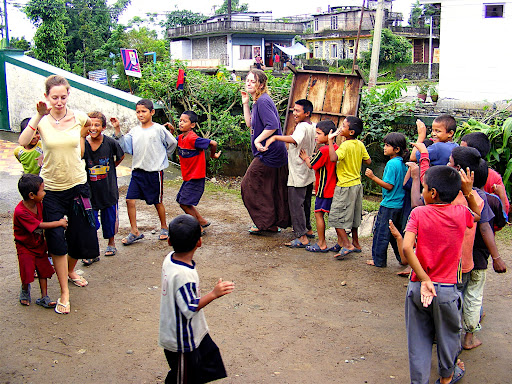
The other thing I wanted to mention was the incredible transformation that occurred in the orphanage while we were away. All the furniture Kel ordered has arrived, and the place looks much more habitable. The amount of money deposited into our accounts to help the children was really amazing. Even after buying them 5 bunk beds, mattresses and blankets, drawers for each child, benches for the classroom, a cabinet to store schoolwork and resources, a large collection of sports equipment, and a DVD player with a good collection of Hindi, Nepali and English DVDs, there was still money left over (!), so we got a quote and left a large sum of money with the only remaining volunteer in order to have the roof fixed properly so that it doesn't leak and ruin all the nice stuff you've everyone's bought...
The family we were living with in Pokhara held a nice party for us last night, complete with meat (a big deal)! It was a really nice gesture, and we had a good time. There were farewells to the doctors, the orphans, the other volunteer, and our de facto family, and then we jetted back to Kathmandu for a stop-off before flying into Adelaide via Bangkok and Melbourne tomorrow.

Thankyou for putting up with my crap for the last 4 months and not complaining about my long-windedness or incomprehensibility. For the last time, my PicasaWeb page will be updated with photos of our trek after I get home tomorrow, or you can always come round to our house and see the photos that will doubtless be plastered all over our walls. We just need to find a house first!

Dan

Friday, September 21, 2007

Nepal - Pokhara

The story continues: there are now almost as many episodes as there are Bond movies... and, not to toot my own horn, but I'd say my ramblings are equally exciting.

But enough about double-oh-seven. How's Pokhara? I know that's the question on everybody's lips, but you need wait no longer; here's the answer: Pokhara's going great!

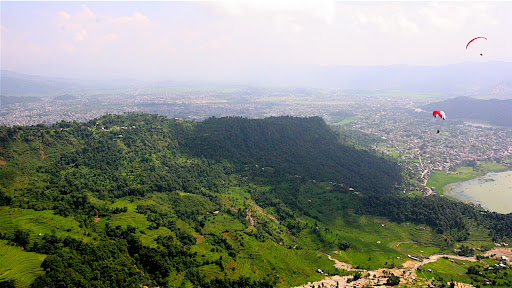
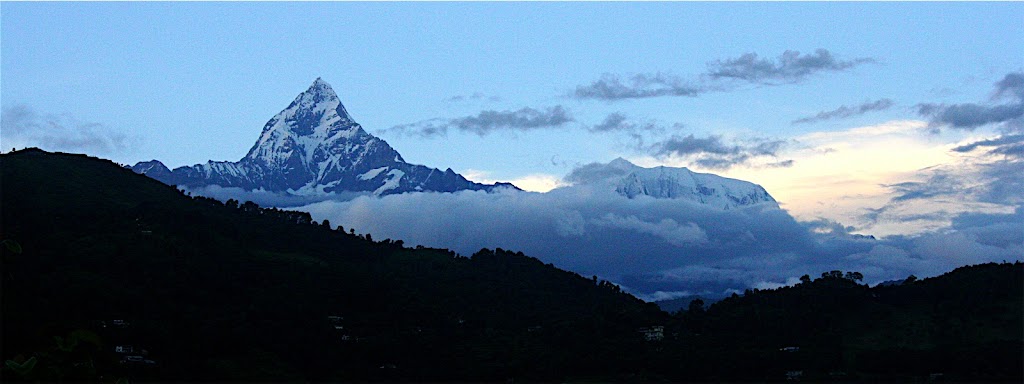
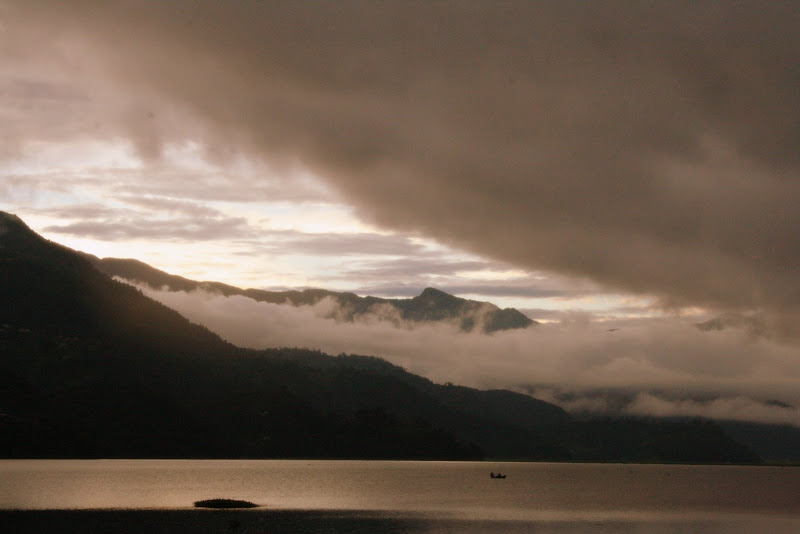
Okay, we've had our trip-ups and snags, but we're living with a really nice family in a spectacularly beautiful valley, and that's the most important stuff. The city itself is a funny kind of L-shape, since it squeezes into the space left by the "hills" around it. (and I say "hills" only to differentiate them from the truly awesome mountains that poke through the clouds on the clearest days - the Annapurnas). At the tip of the "L" is Fewa Lake, around which is the tourist district, aptly and simply named "Lakeside". Kel and I find ourselves there whenever we need a "Western comfort", like the internet or toilet paper. I'm there right now. The lake really is surprisingly clean and nice, with huge jungle-covered hills rising from its edges, and steps of bright green rice-fields near the water itself. We went para-gliding from the top of one of the bigger hills on Sunday, and we got a really great view of the town (that actually reminded me a lot of the Google Maps of the area). That was a good time, until my para-glider guy decided to do a neat little trick with me, where he spiralled at top speed toward the lake. I'm kind of impressed with myself for holding on to what was a stupidly dense pre-para-gliding breakfast.

The family we're living with has been kind and has done what they can to include us in the family. There are very old school gender roles here, and I've found the "head of the house", Ramesh, seems to do a lot more talking and wheeling-and-dealing, while Gita, his wife, gets very little credit for doing a huge amount of work around the house. The family is rather extended, and all considered (including me, Kelly and another volunteer, Hayley), there are 9 people living in the house. We eat dhal bhat (dhal and rice) for every meal without exception, although on festivals we'll also have pappadums, prawn crackers and "buff chilli" (buffalo meat fried with tomato and chilli), and sometimes Western-style hot chips. These special occasions occur about once a week; since we've arrived we've had the Cow Festival, the Father's Festival, the (3-day) Woman's Festival, and the Transport Festival (yes, the have a public holiday to celebrate transport!).

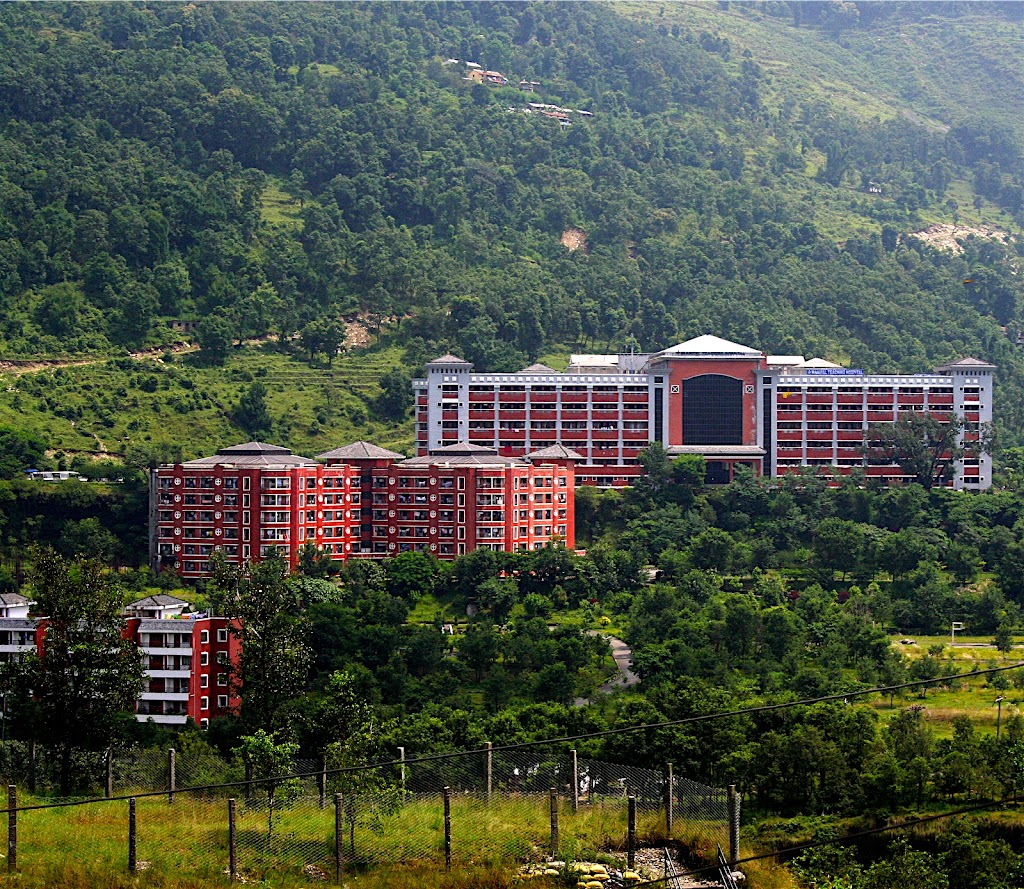
My hospital experience at Manipal has been okay, not great, not terrible. I've spent the last fortnight doing "Community Medicine", going around to various medical facilities in or near Pokhara. I've seen a facility for poor children to help prepare them behaviourally and medically for the step up to real school; a "district out-post" which seems like the Nepali equivalent of a rural medical practice; a number of homes in a small village; the Regional Tuberculosis centre (which didn't have masks for us to wear while they gave us a tour, so I was holding my breath most of the time… seriously, I looked like an idiot!); and most recently Green Pastures Hospital, which is a leprosy hospital run mostly by Europeans. This week I started doing paediatrics, but I got acute haemorrhagic conjunctivitis two days ago (which everyone in the country is getting right now), so I haven't gone in since then.

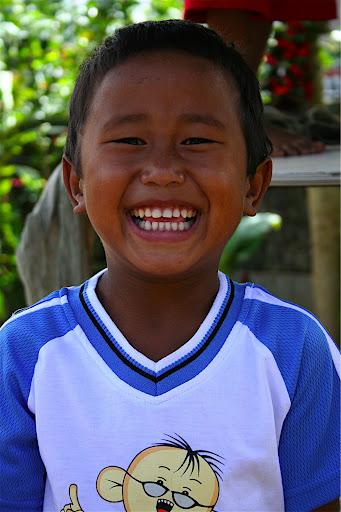
Kelly's volunteering has been simultaneously rewarding and frustrating. She's been looking after and teaching English to a bunch of frighteningly under-privileged street kids. The kids themselves are good kids, but they're dirty for a lack of clothes and knowledge about hygiene, and many are carrying significant psychological trauma related to the loss of loved ones or family violence. Some of them don't smile or talk much, and some hit out at others; a few have obvious physical scars. Despite their clear need, the orphanage they're living in "The Protection and Rehabilitation Centre for Street Children" was only started up a couple of months ago, and is managed less-than-optimally by a large group of "members" who have each contributed financially, and who all need to agree on something before any money is spent. As a result, you won't be surprised to hear that nothing ever seems to get done unless one of the volunteers or Ramesh just go out and pay for it themselves. As it is, the kids have no beds and sleep on the concrete floor, the roof leaks when it rains, the "classroom" has no tables or teaching aids, the yard consists of a parched area of dirt about 4-by-7m with a couple of old chickens pecking around in it, and the toilet door has broken off so that anyone who uses it is exposed to the yard and the road! To make matters worse, the volunteer organisation Kelly's working through (INFONepal) had been paying the rent until last week when a bizarre turn of events resulted in the head of the organisation washing his hands of the orphanage and refusing to donate any more money or provide any future volunteers. The biggest issue there is that the only love these kids get comes from the volunteers, and the only reason they don't run away to live on the street is because they get love at the orphanage…

The rain is coming less and less frequently, and the tourists are starting to arrive as the trekking season gets underway. We've been told that we ought to do our shopping now because the prices go up significantly over the next week or two!

I've come up with the top 10 creature comforts I miss the most, in order, and I'm surprised that they were all readily available in Thailand:

10:
Fast internet (anything that can upload a 500kb picture in less than 5 minutes; it takes over 2 minutes just to load Gmail. I know: omfg roflmao!)
9: A consistent power supply
8: Cooper's ales (or at least any beer that's not Nepal Ice, Tuborg or Everest)
7: Beef (it's illegal to kill cows in Nepal, you get 7 years in the slammer, and buffalo just doesn't cut it as an alternative)
6: Espresso coffee (or any coffee that doesn't contain sugar and/or yak's milk)
5: Fixed prices (bartering gets old… fast)
4: Hot water (cold showers hurt, and I'm a shower princess)
3: Cold drinks (just like the showers, drinks seem to come only at or near ambient air temperature)
2: Western toilets (and toilet paper)
1: Spring mattresses and wonderful, soft, fluffy pillows (I'm tired of this torticollis)

Okay, I'm signing off. Did you hear that the Maoists quit the Government? Good move, dickheads. I don't think the November elections (here, not in Oz) are going to go ahead as planned, the Maoists will get slaughtered at the poles and they won't allow anything to give people the idea that they are unpopular, violent insurgents. Maybe if they didn't kill people who disagreed with them... As things stand, they're in the dangerous no-man's-land of being a bit violent but not entirely brutal, and they aren't stopping the press from slamming them daily. So they'll probably just kick up a big fuss near election time and stop the whole shebang in its tracks.

Wednesday, September 5, 2007

Nepal - Kathmandu

Holy shit, we are in Nepal! It sort of hit us like a tonne of bricks as we left the airport. It was like being a rock star, only instead of legitimate adoration we were getting false praise and seductive offers (to stay at various hotels - I'm sure they would have offered us "a special price, just for us"). As usual, we got suckered into parting with too much money, but myeh, it wasn't so much money that we were out on the street for the night. But let's just say, 1000 Rupees is a very generous tip under any circumstance...

Neither of us were expecting quite what we've seen and done here. The first thing that hit me, and it hit me on the plane as we were landing, was just how old and bare (and at times collapsed) the buildings in Kathmandu are. We'd been to Cambodia and Burma, but this place is a whole new level of dilapidated. I really need to have a word with the guy that does the town planning. Somehow though, as a whole, it doesn't look ugly. Its a bit like a trip back in time to a chaotic, beautiful, simpler place. The legendary views we were expecting haven't really been on offer, because the clouds are hanging low in the air as is usual in the rainy season. We've been told the Himalayas will come into view near the end of the month, and we're looking for a nice new wide-angle lens so that we can take some appropriately awesome panoramic photos of it...

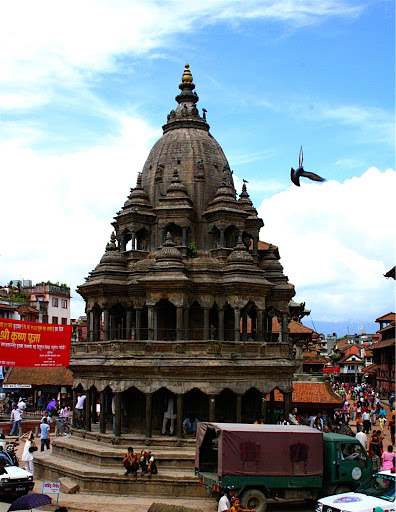
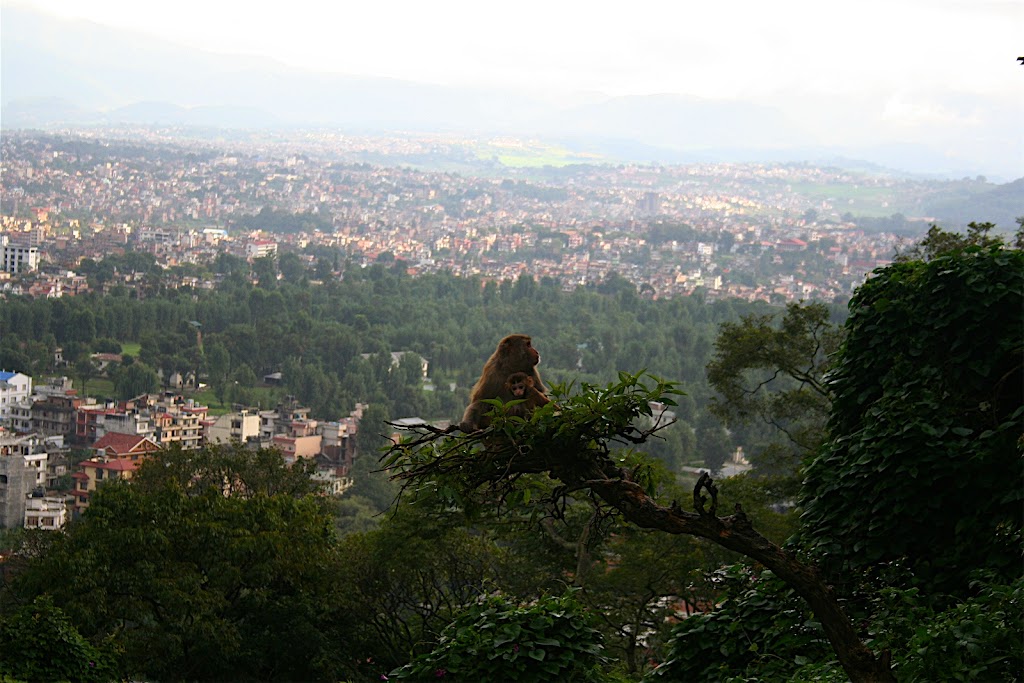
Personally, my time in Kathmandu was frustrated by the impending due date for what turned out to be the biggest, most frustrating assignment in my academic life. Research is boring. Really boring. And writing about it is even more boring than actually doing it. So anyway there I was, sitting in the middle of this beautiful exotic city, laptop at my fingertips, crafting this stupid clinical audit while Kelly and others were off experiencing life in a small village in the Kathmandu Valley. I did manage to see some stuff though; I got out to Patan, one of the three old cities in the Kathmandu Valley, which had some fantastic old temples and buildings, including one temple with 9999 little Buddhas carved into it. I also managed to see Swayambunath Stupa, more commonly called the Monkey Temple, a name given to it for the obvious reason that there are monkeys there. Lots of monkeys. Big daddy monkeys, mummy monkeys, little wrinkly baby monkeys, mischievous monkeys, dare-devil monkeys. They seem to live off the rice that people throw on the statues there. Its on the top of a hill near the edge of the city, so you get this fantastic view. I can only imagine how great it would be in the dry season when the snow-capped mountains rise up behind everything else and the sky is blue with streaks of white... but I'm pretty sure it would be mighty fine.

We had a few worried parents (four to be exact) after the Sunday bombings in Kathmandu hit the media in Australia. Just for the record, they were careful to avoid tourists. They were going for the monarchists, those evil bastards. I can assure you all that I am not a monarchist. I'm pretty sure the same goes for Kelly. It was a salient reminder of the instability of the country though. Its sad to see how this ongoing ridiculousness has crippled a country which could have remained the major trading route from China to India, and which could have enjoyed a rich income from its tourist trade.

The bus trip to Pokhara was at times breath-taking, and at times nauseatingly windy. Probably the goodbye drinks we had with Pete, Mike and Freddy (the first two seem to be following us like blowflies - now they say they're coming to Pokhara, sheesh) didn't help much. The road follows a valley carved by a river, so there we saw many children playing in the water, and people crossing precarious wire bridges. We ourselves crossed the river many times in our ancient bus, a couple of times over bridges that didn't seem as though they would hold our weight. We barely missed a dozen cows at different times, and we were repeatedly forced into the seat in front of us as the bus driver slammed his breaks on to avoid an overtaking vehicle coming the other way in our lane!

The important thing is, we're alive. Kelly has just started her volunteer work at the Children's Welfare Association, which is basically an orphanage for street kids. They have nothing there, even compared to the refugee school in Thailand, mostly because the CWA only just opened up a couple of months ago, in order to try to tackle the problem Pokhara was having with the street kids. Its not technically a school, just a place to stay, but most of the kids haven't learned enough self-discipline or the basic manners to be able to survive the regular school, so those kids get taught during the day, and Kelly takes the English lessons.

I had my first day at the hospital today, sort of. I went in, and everyone was more interested in just sitting and chatting to me than getting me involved in any actual medicine. I've doctors coming out the ears asking me about how to work in Australia! The teaching is run in English, and everyone obviously speaks really good English. One of the professors asked me if I wanted to "take food with him" at lunch time, so I had a really nice Northern Indian lunch. But I never saw a patient. They do "community medicine" work, which they are almost insisting I get involved in, where they travel to nearby towns and villages to supply health care. I'm not complaining, but I was planning on an anaesthetics rotation...

One plus is, I get the feeling that they aren't going to have a problem cutting my rotation a bit short so that we can do a decent trek in October.

That's about it for now. As always, we have our photos up on PicasaWeb. I've uploaded photos into the Burma, Thailand and Nepal albums, which also contain all the previously uploaded photos (but I haven't got around to copying over the comments I've made). I've put together a couple of photos from the Mae Tao Clinic, but be warned that there are some gory photos of penile surgery in that album. Don't blame me if you see things you wish you hadn't.

Thursday, August 23, 2007

Thailand - Chiang Mai & Sukhothai

Another week, another bowl of word salad in your inbox!

We're now into our last week in Mae Sot, and I'm just starting to get unpacked... We've spent the last two weekends trying to see some of the nearby towns, namely Chiang Mai (which is hardly a town as much as it is a city larger than Adelaide) and Sukhothai.
Chiang Mai


The weekend before last saw us in Chiang Mai, where we went with a couple of British medical students. We'd been out the night before seeing off John Melino (a fellow FMC student), and two of the poms (Pete and Mike) drank into the morning as if they weren't taking a bus ride through a mountain range the next day. Unfortunately for them, reality hit with a jackhammer to the brain and stomach a few hours later. I have to say I was very impressed with their fortitude to have survived the journey without using the vomit bags in front of them, though they did make full use of the toilet breaks!


Our first night in Chiang Mai consisted of Pete, Mike and myself heading out to see some muay thai kickboxing, while Kelly and Iris explored the night markets. I hadn't expected the chance to see any Thai kickboxing, so I was pretty stoked when the opportunity presented itself. I wasn't disappointed in it at all; although I didn't see any really amazing acrobatics it was a thoroughly entertaining evening punctuated by an appropriate number of cringe-worthy moments. The greatest of these was probably when they blindfolded four fighters and set them free in the ring to hit whatever moved. The referee seemed perfectly happy with this, even while they were getting king-hit repeatedly in the back of the head. Not that the referee got away unscathed himself...


Our second day there was spent at an elephant nature park, which was one of those amazing experiences I don't ever quite seem able to enjoy as much as I know I ought to. It was lucky I had Kelly next to me, delirious in a manic joy that only a girl surrounded by giant, tusked, trunked mammals could ever know. It was a beautiful day, where we fed, swam with, washed and hung out with 31 huge Asian elephants in a valley topped with mist so that the whole time it seemed like it wasn't quite real. And Kelly rested well that night, despite sleeping on a slab of uneven concrete masquerading as a mattress.


That was basically our experience of Chiang Mai, we'll be seeing Pete and Mike again in Kathmandu, as by some freak of circumstance they are making their way there for an elective at the same time that we do.


Sukhothai

A longer journey but a shorter story. After a chaotic but successful attempt to secure some seats in a packed minibus bound for Sukhothai, we were nearly smeared on the bitumen like canned sardines on toast by our maniacal driver. He seemed intent upon making up time lost on the up-slopes by flooring it on the down-slopes, irrespective of the camber of the road, the lane he happened to be in, or the presence of opposing traffic. Somehow the speedometer readings which I took at regular intervals were no consolation, since the arrow mocked me by bouncing limply between 0 and 5km/hr when we were clearly in excess of 100 and gaining rapidly on a fully laden truck.


Fortunately, the destination was a nice hotel run by a pleasantly dementing Italian and his wife. The weather was very hot due to a lack of rain and cloud cover, and we spent a proportion of our time lounging in or by the pool at the hotel during the middle of the day.


For historical understanding - Sukhothai itself was the first capital of what could be recognised as modern day Thailand (though it was known then as the Sukhothai Kingdom). Before 1238, Sukhothai was a part of the Khmer Empire, if you remember them, and it formed as the Khmer Empire crumbled under its own weight. The new empire expanded by aligning itself with nearby kingdoms... using Theravada Buddhism as the state religion in order to gain the impetus required to do this. The ruins at Old Sukhothai show the importance of this religion in the time of this kingdom, and they are in a much better state of repair than those at Angkor (even if they are tiny in comparison, and lack the same character on the whole). Anyway, we explored them by day and night and enjoyed ourselves mostly.


The next day, I ventured off to a nearby waterfall and cave with some of the others we went with, but Kelly wasn't game to come along, as we went by motorbike. Neither were overly spectacular, but it was fun to practice motorbiking on some almost deserted roads. Viewing the countryside at our own pace, and stopping for pictures when we desired, was nice.


I guess that's that. We leave in a few days, and it'll be sad to go. We've met lots of really nice people, and done a lot of really awesome stuff. But Nepal awaits... I just hope the flooding up there stops sometime soon!


Many thanks to all who have contributed to Kelly's unofficial "Stock The Karen Kids' School" fund! We did some shopping today and bought them a much needed CD player, as well as some CDs, new toys, soap, stationary, and a pump for the soccer balls that one of the guys staying here decided he wanted to donate.


I hope to have internet access in Nepal, but who knows what things will be like. I'm sure we won't have wireless broadband, that's for sure. Don't forget to look at our photos again, there are some great photos of the elephants and the ruins at Sukhothai.

Friday, August 10, 2007

Thailand - Mae Sot

Mae Sot has little in common with the place Kelly and I imagined when we thought of going to a small, rural, border town in Thailand. Its actually quite cosmopolitan in many ways, due in large part to the number of foreigners that come here to either help with the political situation, or report on it. As seems to be standard around here, we have wireless broadband access in our room (that we're paying a massive $13 a night for - and that's including the optional extra of daily laundry). Our food options are pretty diverse, with lots of restaurants nearby. Our favourites have become 'Aiya' (which serves the best Burmese food we can find), and 'Casa Mia' (which simultaneously has great Italian and Thai food, and is on the way to our respective jobs for breakfast), but we've braved (and survived) the street stalls, and some of them also make really awesome pad thai, curry, and khao soey (which is a Northern Thailand dish that is a lot like the most awesome 2-minute noodles ever, only quite a bit better). Eating around here is dirt cheap, and my daily lunch near the clinic rarely costs me more than a dollar.


But enough about the food, although I could go on happily (see our pictures!). I know the burning question is "what are we doing?". I'm obviously doing a medical elective, at the Mae Tao Clinic. Kel is teaching at a school for the refugee kids, which is a long story that she really ought to tell. Both places are a little out of town (Kel's further than mine), and we bought bikes to get around (thanks Nan!).


The Clinic is pretty interesting; it's basically a small, poorly-funded hospital. So far I've worked in the 'medical out-patient', 'surgical', and 'medical in-patient' departments, and this week I'm in 'paediatric in-patients'. Each of these departments is pretty unique. In Med OPD I mostly saw relatively mild ailments, such as stomach aches, headaches, mild pneumonias, that sort of thing. In Med IPD there are serious diarrhoea cases, lots of malaria and TB, which combined would make up about 2/3 of all Med IPD beds. In Surg I saw mostly things that needed draining (like abscesses and haematomas) and trauma cases (traffic accidents, and a surprising number of lost fingers and toes). Also, there's this really weird spate of self-induced penis problems going around the Burmese population in Mae Sot which require surgical intervention. Apparently lots of men around here don't feel that their package is up to snuff, and resort to backyard "enhancements". Most of the cases involve injecting 1-2ml of coconut oil just under the skin of the penis, this causes some serious scarring under the skin, and over the course of a few years worth of injections they end up with a massively enlarged appendage. Unfortunately, pain and poor erectile function are some of the side effects, and these guys come to Mae Tao to get it fixed. Our solution? We remove all the skin between the head and the base and give them a skin graft. I posted a couple of pictures on the web (In the 'Mae Tao Clinic' album, not in the 'Highlights' album!).


Paeds IPD has been interesting so far. A lot of tragic cases of HIV, malnutrition and meningitis. I haven't had anyone die on me so far, but another med student (from my uni) told me the horrible story of how he rocked up to the clinic to find all the staff huddled around a new baby that was comatose and severely dehydrated. Over the course of the next 1/2hr the baby deteriorated, and nobody could get any vein access, and he ended up having to do his first real life resuscitation on a 4 month old kid with a hysterical mother pleading with him incomprehensibly. The kid died, and he was pretty upset for quite a while. I'm hoping I don't have to do anything like that... There are a couple of kids in there right now that are going to die in there though, which is pretty sad.


To change the subject (which I think its about time I did), I'm going to try to explain why there are refugees in Mae Sot. Burma has a nasty government that is brutal in trying to hold together the country. Originally, Burma (aka Myanmar) was just a collection of disparate ethnic groups, and it just had a line of convenience drawn around it when the British colonised the area. After gaining its independence from Britain, Burma has undergone a change for the worse, with a military dictatorship giving way to the aptly-named SLORC (State Law and Order Restoration Council), which itself is now called SPDC (State Peace and Development Council). Despite the changes, all of these governments have viciously guarded their power. The full story is long, even if it isn't that complicated, and you can read about it (with a slightly Karen biased flavour) here. Although its a pretty stock-standard military regime, a couple of things that make it stand out are:

  1. It very publicly got completely flogged in the last elections, winning only 2% of parliamentary seats, compared to 82% won by the National League for Democracy (Aung San Suu Kyi's party, who was subsequently put under house arrest, where she remains to this day)!
  2. The SPDC has essentially no ideology at all, and is probably the best example of a purely militaristic government in the world today (from what I understand). It exists solely to protect its own power, and all of its energy goes into this. They don't even put on an international front, so far as I can tell; this is their official website, and it definitely doesn't suggest any kind of ideology!

In the end, the problem with it is that they are punishing villagers in Karen state as part of their "four cuts" policy, which aims to cut food, funds, recruits and information to insurgency groups by "systematically terrorising the civilian population in ethnic minority areas". In real terms this means all of: torture/interrogation, rape, summary execution, burning farms and villages then laying landmines to prevent villagers rebuilding, and forced labour/portering for the Tatmadaw (Burmese military) - i.e. slave labour. Because of all this, there are thousands of internally displaced persons (IDPs) living in the jungle, getting malaria, and having practically no access to clean water, healthcare or an education. Below is a story from a report ("State of Terror") written by the Karen Women's Organisation. I think its a translation, and its imperfect, but you get the gist of it:

Case #955
Name: Naw Win Shwe
Age: 35
Date of Incident: 13/03/2006
Place of Incident: Nwar Lay Koh, Mone Township Kler Lwee Htoo District
Perpetrator: SPDC troops

Human Rights abuse: Torture and Murder, Forced displacement

"I was born in Aw Law Si village and stayed there until I was 25 years. Then I married in 1997 and went to Nwar Lay Koh Mone Township Kler Lwee Htoo District because of the military attacks. I had 4 children and the eldest one was 9 years old and the youngest was 5. We had to flee because we could not survive our life. We were faced with many problems like the SPDC taking away our belongings and burning down our house, our farm, our food and our grain. As we are farmers my husband worked hard to have food for our family. We were always moving. 2006 is an unlucky year for our family. We fled from our place because we
heard that the SPDC troops made a heavy operation upon our Karen State and so we hid in the forest.

On 13th March 2006, my husband was arrested by the Burmese troops while he was
coming back from the hill farm. We heard the gunshot and dared not go back to look for him. The Burmese soldiers brutally killed him by taking out his eyes, cutting his ears off and cutting out his mouth from his body. We heard his screams loudly because it was not too far from us. But we dared not go to that place. If we went then the SPDC would do the same to us as they did to my husband. So we fled from our house and we went outside our village and hid in the deep forest. Then the next day we went to Teh Na Hta village then to Pa Ta Hta so that we would be far from our village. My husband was 30 years old and he was only a villager not a Karen soldier. The SPDC troops shot him as a Karen soldier and killed him brutally.

As we went out from our village we also went far from our farm, because the SPDC
troops went around our field and if they saw one of us they would have killed us or forced us to labour for them. This situation was in March 13th 2006 and so from the relocation side, from our hiding place we then moved from place to place and then came to the new camp. We were wandering for a month to reach the new place because the SPDC troops shot their guns and so we tried to escape from them and it took a long time. On our way it was rainy season and it was really hard for the children to walk or climb up the mountains. We didn't have enough food and so we had to share with each other. Sometimes the children were crying because they were afraid of the SPDC troops and sometimes they were thirsty and hungry and so they cried. But the elders stopped them crying because we were very close to the SPDC and if they cried loudly there would be a danger for others, so when there was some food they gave it to the children first.

I have four children, the oldest one is nine years old and the youngest is five years old.
When they were in the village they attended school. After their father was killed by the SPDC the youngest son told me that when he becomes a young man he will join the Karen soldiers and take revenge on the SPDC for his father. I tried to explain him to go to school but he just told me that he wants to be a soldier. When we started our journey my husband was at the farm and worked for the whole day while we were in a hiding place and so after he was killed, I went on the journey with my 4 children. It is very dangerous and difficult for they were too small to walk or carry things. In the jungle they got sick and had diarrhoea. There were no medicines and no clean water. In our group there were about 14 families. Because of the
situation, being left alone with small children I cried at night. I didn't want my children to see me while I was crying. Now we are in the camp and I feel that it is better than living in the village because we get many things from the camp. I hope that my children will have a chance to study in the camp."

The whole report is really long, but the intro is worth reading if you're interested in what's happening to the Karen and other minorities in Burma. You can understand why these people want to escape to Thailand though... Unfortunately, the Thais aren't recognising them, and they are pretty restricted in what they can do ( i.e. they are mostly stuck in refugee camps outside of town, and can't legally work or earn any money). The police apparently have a racket going where they take refugees to gaol and then expect a bribe (consisting of everything in their pocket) before taking them right to the border, letting them go and turning around a driving off. Then the refugees just walk back into Thailand and try to avoid being taken to gaol again! So basically, the Thai authorities are just trying to make as much money off the refugees as they can. I suppose its better than letting them die in Burma!


You might be wondering how the Burmese government funds its operations. Burma is actually very rich in natural resources, at should be a well-off country. The government sells gems, drugs (unofficially) and natural gas to whoever is willing to buy it. Of these three, the natural gas the most feasible source of funds for the junta, and they just recently finalised a deal with China to build a gas pipeline between the two countries and to exclusively supply China with there natural gas. Fucking China! Where practically the entire world has sanctions against the Burmese, China is capitalising. And they have UN veto power so there's not much the UN can do...


Anyway, Kel and I are going to Chiang Mai on Saturday (i.e. tomorrow), to go swimming with elephants! It should be good! We've met a couple of poms that we're going with (and they're also going to be in Kathmandu when we're there so we're going to try to catch up with them then too!). Tonight is the both the birthday of a girl that's staying at Ban Thai, and the last night that John (another Flinders Med. Student) and a couple of others are in town, so the Ban Thai crew are partying hard tonight!


I finally, yesterday, got my new credit card. Thanks mum for sorting that out for me, I know it was a royal pain! We're going shopping for stuff for the kids at Kel's school today.

Friday, August 3, 2007

Thailand - Bangkok (Voglee Saga)

We'd just got to the hotel and dropped off our bags and decided that we'd spend the rest of the afternoon in Chinatown (where we were staying) looking at the Golden Buddha and nearby sites. We didn't have a very good map, and while we were trying to figure out where we were a man came up and asked us if we needed any help. He was obviously trying to get us into one of the tuk-tuks nearby, but we figured he'd be useful to point us on our way. He pointed out where we were and where we needed to go, but said that there were a few other nice places to go, and also suggested "a very good, cheap tailor" that was just out of Chinatown which he called "International Export Tailors". We gave him our map, and he plotted a couple of spots, including a nearby temple that was "nicer than any others around here". He convinced us to hop in a tuk-tuk by saying that we could have the tuk-tuk for 30 baht/hr (about $1), and we figured that was pretty cheap, and since we kept getting lost and didn't have much time it was a pretty good idea to have a tuk-tuk guide!

First we went to the Golden Buddha, which was really kind of tacky. It was an impressive hunk of solid gold (5 tons), but they haven't housed it in a temple yet so it was just sitting in a really inappropriate building. Anyway, that's not the point. After that we thought we may as well go just around the corner and see this other temple the nice tuk-tuk organiser guy suggested. Didn't think much of it, since the temple was already marked on our tourist map so we figured it was just another cool Thai temple. When we got there, it was a reasonably nice temple - nothing spectacular, but then neither was the Golden Buddha so we thought these Thais just over-estimated the coolness of their Buddhist monuments... While we were there (and we were the only ones there) a really nice man came in and prayed and then showed us how to pray properly. Then he asked us a bit about what we were doing in town and where we were from (stock standard questions that we've answered 8 thousand times since leaving home). He also said we should visit a bunch of places and marked them on our map. When he saw that someone had marked the "International Export Tailors" he said "who told you to go there", and we replied that it was our tuk-tuk driver (a slight untruth to save a full explanation). He told us he was very impressed with how honest our tuk-tuk driver was because most tailors give tuk-tuk drivers big commissions for taking tourists to their stores, but these guys didn't have any commissions and were the best tailors nearby. He said their trading name was "Voglee Tailors". They made some of the suits sold by Armani and Hugo Boss and others, and that if we wanted suits they were the best value place to go.

Awesome (we thought), two nice people had independently said this was a good tailor. My family had suggested that Thailand would be the best place to get a suit, I needed a suit for graduation and beyond, and since we were only in town for 3 days we should probably go somewhere that day to make sure we had time for a couple of re-fittings.

We asked our tuk-tuk driver to take us there. When we got there it was a normal, large tailor, with the name "Voglee Export Tailors". We were ushered into a private room and were shown a few brochures outlining some of the "suit styles" available. There was an Armani catalogue there and the man spontaneously explained that they were not able to put any other brand name on the suit other than their own (due to licensing restrictions, was the unstated reason), but reaffirmed that they did in fact supply a number of European companies including the ones the guy at the temple mentioned. We started talking price, in US dollars initially, but then he started jumping back and forth from baht to dollar and using the calculator to figure it all out. I was unsure of the exchange rate (and asked to confirm that it was 40 baht to the dollar), but he was confident that was right and judging by the other customers in the store he clearly dealt with white people all the time. He said they only dealt with wool/cashmere blends and all their suits were lined with Thai silk. The rolls of material did all say "cashmere + wool" on them and it felt pretty soft (I still don't know if it really is cashmere/wool, I don't know enough about cashmere!).

In the end, we decided to get 2 suits (one a mid-grey, one nearly black with pinstripes), both with a 2nd pair of pants (since I'd been complaining all year about only having 2 pairs of pants I could wear to uni), 3 fitted shirts, and 2 blouses (for Kelly, not me). The total: $US765. At 86USc to the $AU1, that would be about $870. In a pinch, I could afford that, and it was pretty good for 2 Armani-quality suits with all the trimmings. I paid upfront, like a good little tourist, 30,800 baht on my card. I thought I'd decide about home delivery later (an option they were pushing), after I'd got the suits.

When I got back to the hotel, I thought I'd look up Voglee's on the internet and see what people thought of their suits. Up came 20 stories of the Voglee scam: the nice guy on the side of the road suggesting some good tourist places (including a temple), the guy in the temple doing the same. Elsewhere, I found out that Voglee does in fact offer a large commission to tuk-tuk or taxi drivers who takes a tourist to their store (and that our tip to our nice, cheap tuk-tuk driver must have been accepted with an inner giggle on his part). Most people said they'd paid for suits for home delivery and never saw them. Others said they got suits that didn't fit at all right. Some couldn't believe how much they'd paid compared with other places.

I decided to check my bank account after that, and found that $1076 was pending removal by Visa and panicked that they may have done more than simply over-charge me (like steal my identity or something); I also thought it might not go through if I cancelled it straight away and told BankSA I'd lost the card.

In the end, we spend a large part of our time in Bangkok sitting in Voglee's, and most of the rest stressing out about never getting any products out of them. I tried to negotiate a refund of the amount they overcharged me, but they said it was my fault for not knowing the exchange rate, since they dealt exclusively in baht and could not be expected to know the exchange rate (an infuriating lie). After working hard to keep my cool (and not cause anyone to lose face, which I hear is the best way to get what you want around here) for an hour, I was offered free delivery to Adelaide... "No thankyou, I thought I'd use the pants and shirts during my travels" was my rather curt reply. After another hour, they'd offered me a partial refund (of about $50), which they said would take at least 2 weeks to get to me. Finally, they offered me a 3rd suit, which I really didn't need. It was this final offer that I accepted, because I was definitely going to make sure they gave me something, and the other options required too much of a waiting period before I saw results (and to be honest I didn't trust them at all!)...

I needed three fittings, and I'm still not entirely happy, particularly with my shirts (they just could not get my neck size right!). The suits don't look half-bad, and if they really are wool/cashmere with Thai silk, I definitely still paid less than I would have in Australia. Unfortunately, I had to cart them all the way to Mae Sot, and now I'll have to decide what to do with them here.

Monday, July 16, 2007

Thailand - Bangkok

Bangkok, what a ride... We're both relieved to have escaped alive, and it was definitely the most confusing, uncomfortable and just generally stressful couple of days we've had on our journey!

First of all, there really isn't very much to see and do in Bangkok. We were pretty surprised by that. Everything seems to centre around Buddha (someone that we're well and truly sick of) or the king of Thailand (who we're less sick of, but he isn't very interesting).

We saw the Golden Buddha, the Emerald Buddha, the Reclining Buddha, and a bunch of other lesser Buddhas. They're all very Buddha-y, with lots of precious metal and stone, and people praying and lighting incense, and monks all over the place doing monky stuff like sitting looking pious, but there's only so much Buddha one can take in a day. We definitely hit our quota and then some. Its hard to take all this very seriously; you aren't allowed to point your feet at a Buddha, but you are allowed to charge money to let non-believers pile in to look at said Buddha and photograph the hell out of him.

We saw the Grand Palace, and had a cruise along the river. People in Thailand really like their king. I mean, they really like their king. I'm not sure why, and I don't feel I can ask them without betraying my true feelings towards its hilarity, so I've kept my mouth shut. There are huge posters of him and his wife everywhere, and people wear yellow clothes all the time, because yellow is his colour (he was born on a Monday, and it seems Monday has been decreed Yellow Day by some higher power that has authority over this sort of thing). You see "long live the king" written all over the place too.

Bangkok is one big scam that everyone else is in on. We didn't realise this, so we were kind of at a disadvantage when the conmen came to collect their money from us innocent little farang (that's Thai for "stupid foreigner"). See the next post for our run in with Voglee Export Tailors, an adventure which cost me over $1000 (although at least I got something for my money!). We avoided the famous gem scam, but nobody warned us about the tailors. After this experience we heeded the advice we'd received from numerous sources, which was basically to never trust anybody on the street suggesting you do something or go somewhere. It was tiring though, being appropriately paranoid...

Siam Square was kind of like our little sanctuary after experiencing the farang-eaters around Chinatown (where we were based) and the tourist sites. Siam Square is the Bangkok equivalent of Rundle Mall. Its just got a huge number of shops and shopping centres and that sort of thing. Young and affluent Thais seem to be the major customers in Siam Square. But really (and we realised something about the merits of capitalism and big business as our feelings crystallised) we just felt safe sitting in a Starbucks drinking coffee and watching people shop. There were so many little barriers stopping conmen from getting to us while we were in Siam Square: there were people everywhere, rental prices were clearly sky high, most of the stores were international chains with reputations to protect, bartering was not the thing so everything had a price tag (ahhh, glorious glorious price tags - you have no idea). We watched two movies at the cinemas, Harry Potter and Transformers, and we spent an evening eating then drinking at Hard Rock Cafe. We really liked the normality of Siam Square, a stark contrast to Chinatown. I think we will stay in Siam Square when we go back after my elective!

So now we're in Mae Sot, which is a calm little city in comparison. We are really enjoying it here, which is a relief since we were both a little nervous after Bangkok. I can safely say that from my experience Bangkok is the worst city in south-east Asia - the people are generally untrustworthy, the place is dirty, there isn't much to see, it has no character or class and the traffic is horrible! Spend as little time as possible in Bangkok, as the rest of Thailand is where you want to be...

I've completely updated our photo album, since we have yet to take a photo in Mae Sot! You can see it here. We've added a couple more from Hoi An, Phnom Penh and Angkor that were overlooked initially, and I've labelled and written comment for them all now.

Saturday, July 14, 2007

Cambodia - Angkor

Our stay in Siem Reap, the gateway town to Angkor, was really, really awesome. We hooked up with a nice and friendly tuk-tuk driver, we had a fantastic hotel, Siem Reap is a great place, and Angkor itself was just mind-blowing. The only real problem was that it was a malaria zone so we had to be pedantic about applying Rid, wearing the right clothes, and just generally avoiding mozzies.

(And for those not in the know, a tuk-tuk is basically a motorcycle powered rickshaw...)

So our tuk-tuk driver, Pete (a Western pseudonym), really was a lucky find. Without explaining every story, he was just always there, no matter what little mess we got into. Now that we're in Bangkok, we wish we still had Pete around to make it all okay!..

Siem Reap is a very tourist-centric town, so we were able to enjoy a very Western friendly night life, much the same as in Phnom Penh. It was about as laid back as Hoi An (in Vietnam), although it was technically larger (and didn't have the spectacular architecture). The river splitting the town in 2 was well maintained, and the centre of town where we went for dinner each night had a number of restaurants and pubs; most served Khmer food, but some also served Western food. It was all priced in US dollars, and everyone spoke good English and understood Western culture, so it was really easy and relaxing to hang out and eat, drink, or whatever in the town.

To give some historical understanding to Angkor (the real highlight of the area): the Khmer are the predominant ethnic group in Cambodia, and were the original people who inhabited the region around Siem Reap. They once had a huge empire, which engulfed most of South-east Asia, and included much of modern day Vietnam, Thailand, and Laos. This was at its most powerful and influential about 900-1100AD.

Angkor Wat, the famous temple that everybody talks about, is pretty fantastic. Its huge, its an audacious architectural achievement, and it just plain rocks. The more you understand about Hinduism, the more you can appreciate and ponder about the thought and work that went into its design. Its basically a big, square temple, with a moat that spans 150 metres in width easily, an outer wall, a huge inner garden, an inner wall with really complex floor-to-ceiling carvings outlining important Hindu mythology, and then a 5 tower representation of Mt. Meru (the mythological centre of the universe where the Hindu gods are found) in the centre. Its hard to explain why its so cool, but its bigger than you think, and its just really awe-inspiring from the second you start walking across the moat to the time you walk away.

Now, Angkor Wat is cool, and its all anyone ever seems to talk about, but that's a bit unfair to the ancient Khmer, because it was just one part of a huge city of 1 million people called Angkor. And really what made this whole experience so unforgettable was all the other stuff around Angkor Wat. I really strongly believe that people should talk about Angkor, not Angkor Wat, because Angkor as a whole is always going to be your real experience if you ever go there. So in the end, although we spend 2 full days at Angkor, only a few hours were spent at Angkor Wat, and both Kelly and I didn't even think Angkor Wat was the nicest place. The ruin of Ta Phrom was more enchanting by a long shot.

Ta Phrom is a temple that is slowly being swallowed by the jungle, and has absolutely enormous trees growing straight out of its stones. We saw it just prior to another Monsoon downpour, and it got carried away trying to photograph it when the rain started pummelling down on us. Fortunately, the ever-watchful Pete left his Tuk-Tuk at the roadside and came running down the track (now a mudslide) and rescued us from the downpour. The funniest (and also saddest) thing was seeing all the little children running after him looking for us, carrying their postcards and bracelets, desperate to make one last sale for the day. I ran ahead, but Kelly was caught sopping wet running for the Tuk-Tuk with a troop of children around her, all offering her all their wares for a dollar or two. She said everyone was laughing, fully aware of the ludicrousness of the situation! Still, its hard to imagine the financial situation these children must be in to be willing, at the age of 4 or 5, to hawk their souvenirs in a torrential downpour to a tourist running as fast as her thonged feet could carry her.

We probably saw another 10 temples (or similar) from the Khmer empire, and you'd need to look at our photos to see how different and cool they all are. Particular highlights were Bayon, Angkor Thom, the Terrace of Elephants, and Baphuon. Most were built by the Khmer kings (each wanted his own shrine to the gods), and really all of them inspire so much from your imagination that they change your view of a time that was "the Dark Ages" in Europe, as well as your ideas about Hinduism, Buddhism and the place of religion in society. I just loved the Nagas that protected each building, and the huge crumbling walls that surrounding them all.

I guess that's really about all I can say for now about Siem Reap. We took so many photos its going to be a real task to sort out the best ones. I'll try to upload some to our photo album here, before I go to sleep.

Thursday, July 12, 2007

Cambodia - Phnom Penh

We're in Phnom Penh now, the capital of Cambodia. Its a funny place, many of the buildings are newer and nicer than any in Vietnam, and it seems much better set up to deal with us tourists (eg the restaurants are much more likely to serve Western foods, and be clean-looking and nice). Things seem to cost a little more here too, from tuk-tuk rides to entry fees. But there is clearly a greater number of people in severe poverty; I get the feeling that there's a much greater gap between the rich and the poor. We've both been having trouble dealing with it, just having kids begging for money all the time and seeing the dirty, ramshackle and sometimes precarious way in which people live. The sewerage system is a bit bodgy too, and you can't necessary put toilet paper into the toilets (but I suppose I should be thankful there are toilets at all!)... We've seen a number of amputees around too (mostly begging), which we presume is a consequence of all the land mines in Cambodia.

Its been a rough couple of days really, and I'm hanging out for Angkor Wat tomorrow to remind me that humanity can create as well as destroy. We spent today learning and seeing what we could about the Khmer Rouge and Pol Pot. In a word, "Brother Number 1" was a real monster of a man. In a few more words, its hard to understand how anybody could sentence nearly a quarter of their countrymen to death by torture, but here's a man that did. We visited the Killing Fields of Choeung Ek, one of hundreds of execution centres across the country. What was amazing was that it had been left so unaltered from the time that they disinterred the bodies. It was basically a huge square plot with 129 mass graves in it (about a third of which haven't been disturbed), so we just walked around these huge holes in the ground and read the sign-posting, which were things like: "here is where 148 headless remains were disinterred", or "this site contained the naked bodies of 253 women, children and babies", or "this tree was used to beat young boys". If you looked at the ground under you, you could still see clothes in the mud.

After that thoroughly chilling experience we hit ourselves with more death by heading to S-21, the most famous of the "Security Centres" set up by the Khmer Rouge to "interrogate" (read "torture") political prisoners, I can't remember numbers, but hundreds of thousands of people were brought there, and less than a dozen ever walked out. To give context, between 1 and 3 million people were killed by the Khmer Rouge (estimates are difficult because the Vietnamese and Americans also killed many Cambodians who have disappeared), and this all happened in the late 70s.

It sounds crazy, but Pol Pot wanted all those people dead because of a simple risk assessment: it was better to kill thousands of innocents than let one CIA or Vietnamese spy get away. So, the psychopathic moron set about forcing confessions out of anyone that arouse even the slightest suspicion. Obviously, the people he was most paranoid about were those in his own ranks, so many soldiers and politicians themselves were tortured to death. I don't know how he could have possibly thought the systematic murder of his own political party and army was a sustainable strategy, but he clearly did. His economic policies were equally bizarre and demonstrated a complete and utter lack of insight into the most basic economic principles (he herded almost everyone to the countryside and made them farm rice, dismantled the schools and unis, and killed anyone educated).

But anyway, S-21 itself has been left much the way it was found, the same as the Killing Fields. As an old high school, it has a particularly creepy feel about it. When the centre was found abandoned after the Vietnamese invaded, all 12 of the classrooms in one of the buildings had a single bed in it, each with a tortured dead body chained on it (or by it). They have left the beds there, and each room simply has a photo on the wall of what it looked like when it was found. Very haunting.

So, basically we've been learning about the horrible things that have happened to the Vietnamese and Cambodian people, and coming to terms with the fallout of those things (ie the lack of money and infrastructure, and all that they bring). It makes you feel really guilty and undeserving of being so ridiculously rich, but also so powerless to do anything really meaningful.

Bus to Siem Reap (near Angkor Wat) today. There are some new photos of Saigon and Phnom Penh in our album. There are a couple of particularly good ones up today I think.

Tuesday, July 10, 2007

Vietnam - Hoian & Saigon

It's our last night in Vietnam tonight. We leave Saigon tomorrow at 1pm by bus to go to Phnom Penh. Not sure how we're going to spend the morning, but we only have about 5 bucks worth of Dong left and we're not gonna take any more out since we'd just get a crappy exchange rate into Cambodian riel, so we'll be pushing our 5 bucks as far as we can!

Our time in Hoi An was relaxing, relatively quiet just generally nice. It was marred somewhat by an expected and reluctantly accepted bout of gastro, which left me functionally chained to the bathroom of our hotel room. It was all a bit of a fever dream really, I remember feeling very achy, wishing the bed was softer, and wishing there was more than one English-channel TV station. While I wasn't throwing up, we were able to enjoy a unique, old port town, with a strong multicultural heritage created by the various European and East Asian groups that settled in the town 300-400 years ago when it served as a link between East and West.

We were also able to get out to My Son, an interesting Cham ruin site just out of the town. It was a Hindu Holy City, and it is set in a shallow valley that was thought by the Cham of the day to be the centre of the universe. It was built in many stages, with different Cham kings between the 4th century and the 14th century building different parts of it, so that there are a bunch of "sites" with unique architecture. Much of it was destroyed in the American war, and since nobody has ever figured out what the old Cham people used to glue their bricks together, it's been a hard task to restore the buildings.

We had a nice boat ride back down the Thu Bon River to Hoi An, and had a nice early night after a dinner of what was advertised on the menu as hamburgers. They weren't bad really, but they were like no hamburger I've had in my life. I suspiciously pecked at what I could of mine before deciding I'd give my stomach a little longer to recover.

After Hoi An, Saigon has really been a bit of a roller-coaster. It's the biggest city in Vietnam, and it has the craziest traffic to support that fact. The street vendors and cyclo drivers seem a little more insistent here than in Hanoi, but we've learned a few tricks to avoid their unwanted attention, and we've resigned ourselves to our place in the Vietnamese economy. It's the city that seems most obsessed with the "American" war, and it seems fractured by the coexistence of ex-Southern Army soldiers and ex-Viet Cong within its boundary. Its more Westernised and colourful than Hanoi, but also less refined somehow.

We managed to get out to the Cu Chi tunnels today, which played a really important part in the American war. In a way, they are a pretty spectacular human achievement; 250km of 3 levels of catacombs connecting towns to each other underground, and all camouflaged from the surface and built with hand shovels. Much of the tunnel system was destroyed by heavy American artillery and bombing, but parts of it are still there, and you can go in them and see what they were like. You can probably imagine: dark, claustrophobic and uncomfortable.

We were both put in a sad, philosophical frame of mind by the (very one-sided) Museum of War Remnants, which had a fantastic temporary photographic exhibition honouring 120 of the photojournalists that were killed in the American war. It particularly focused on about 10 of them, American and Japanese. There was also a long part showing the evidence for American war crimes committed during the war, and showing the damage done by American chemical warfare (phosphor, agent orange, etc). As a view you would be unlikely to see anywhere else, it was pretty interesting, even a little enlightening. Mostly though, it just depressed us with the realisation that real live people can do pretty much the most horrible things they can imagine to other real live people. It really made me think about how wrong war is, and how there isn't a single idea or imaginary line in the history of ideas and imaginary lines that's worth going to war over to defend.

I'm looking forward to Cambodia. I don't really know what to expect though. The story of the Khmer Rouge is another tragic tale in the region, but I've been told that there is much beauty in the country. I'll let you know when I'm there!

We've popped a few more pictures up, not yet of Saigon, but of the rest of Hanoi and of Hoi An. There are also some pretty detailed explanatory remarks for some of them. See our photo album here.

Saturday, July 7, 2007

Vietnam - Hanoi

Our flights were great fun, as flights always are, and were complete with a delay in Melbourne where we were stuck in the departure lounge for half the day. And since they would only delay the flight by 20-30 minutes each time, we ended up sitting doing absolutely nothing. Well, I did nothing while Kel finished watching the 7th season of Gilmore Girls on the laptop...

On arrival in Bangkok we were both blown away by the weight of our packs. I'm not sure, but I think their might be lead woven into the thread for strength or something. Either that or I packed too many t-shirts. Our night in Bangkok was spent in a pretty lavish hotel room. I've never seen a bed that wide, and that about sums it up since we didn't do anything except sleep. A quick pre-sleeping meal in the hotel restaurant was nice, but we were both sad we missed the jazz band by all of 10 minutes; I was pretty psyched for a "Lost in Translation" moment.

Hanoi so far has been pretty intense. Its a bit sad we aren't going to get to go anywhere outside of town, and since I'm an idiot and forgot to confirm the train tickets, we now have to fly out to Hoi An tomorrow, meaning we leave town earlier than planned (and spend three times as much). But I really don't feel like busing..

I don't get the cyclo and taxi drivers around here. I get the people who heckle you trying to get you to buy their postcards/fans/fruit/clothing/etc, but the taxi drivers do the same thing. And it just can't work. Who's gonna be walking along the road minding their own business and then out of the blue, just cos someone asked them, hop in a taxi and go. Where are they gonna go? Maybe they're thinking we'd like to twiddle our thumbs for a bit in the air-conditioned comfort of the back of the taxi? As a positive, when you do want to get a taxi, its pretty easy to get one. All you have to do is stand on the corner of an intersection and keep your camera and backpack in plain view...

We've realised the wisdom of pre-arranging prices for taxi or cyclo fares. Although this evening even that failed us. We got totally scammed by a cyclo driver who rode us to the nearby marketplace. In a way we were pretty silly not to check the map for where we were, but anyway the dirty bastard rode us all around town and then dropped us off practically where we started from. Fair enough he got us to our destination, but it wasn't exactly the shortest route. And then he had the cheek to A) tell us that the pre-arranged price was for one person not two, and that we therefore had to pay twice, and B) refuse to give us all our change, claiming that he was sweaty and tired and needed a beer. I didn't have much sympathy for him; we gave him a pretty bloody decent fare for something that was 150 metres away, and it was his own dumb fault for getting sweaty riding us there in a manner that wasn't very efficient.

Its funny though, even on principle I had some trouble caring enough to argue over 35c. On a related note, I started laughing last night as I realised I was bartering with a 5 year-old magnet saleswoman over paying 50c and paying 44c for a magnet. She thought it was funny too, but I wouldn't be surprised if it was because 50c was the most any sucker had ever paid for one of her magnets!

We've seen a bunch of really cool stuff. Yesterday we just walked around Hoan Kiem lake and looked at some of the shops before eating dinner at a reasonable rooftop restaurant that charged us 7 bucks for 2 mains and 2 (rather large) bottle of beer. Then we saw a waterpuppet theatre before checking out one of the night markets in the Old Quarter where we're staying. The end of the evening was spent drinking another beer overlooking Hoan Kiem lake and marvelling at the art of the motorcyclists below us (I can't believe I haven't seen anyone die horribly yet, and I'm only slightly less surprised that I myself haven't died horribly yet).

Today we went to the Museum of Ethnology, which had a really interesting exhibit on "life under the subsidy market" (from the start of the American war and the mid-80s). Most surprising was the level of discontent allowed to be recorded for posterity in a government-funded exhibition. I was actually really impressed. I wonder if they'd allow similar comments to be made about Vietnamese life today? The general flavour was that of "sure a policy mistake was made back then, but now we are in 'the renovation' and the improvements we've already made are just the start of a great change for the lives of Vietnamese people". Still, some of those people gave the government of the "subsidy market" period a fair load, which I figure must be pretty much the government of today. Or am I just wrong!?

After that we visited the "Temple of Literature" which was founded to honour the memory of Confucius. Interesting architecture, and another culturally fascinating place to visit. The Vietnamese have a big thing about honouring their ancestors, and they will go to these shrines and leave gifts in front of giant statues that symbolise important dead men. Its really cool to watch. I really need to find out exactly what's going on, because there are a lot of little things that they do which clearly have a lot of importance, but I have no idea why.

That's about it, so far. I've put some photos up here of the places we've been to, but I haven't had time to label them yet and its really late and we have to get up early tomorrow so we can go see the Mausoleum of Ho Chi Minh. I've never been to a mausoleum before so that should be interesting/creepy/awesome. But its 2:20am and we need to be there by 9:30 so I'm really needing some sleeping.

How did I manage to write so much and yet say so little?

Saturday, June 30, 2007

Going Overseas Tomorrow

Kel and I are leaving tomorrow morning to go to south-east Asia and Nepal for 4 months. Its a bit cool. I'm still not packed, but you wouldn't expect anything more from a man with the nickname Narcolepsy. This email is mostly for the benefit of family who will want to keep tabs on us and make sure we didn't book in to the wrong backpacker's hostel (see recent Hollywood movie), but I figure it doesn't hurt to let everyone know where we'll be and when, etc. You just might want to call us or something because you miss us.

Attached is a pdf with basically a complete itinerary. There are a few things that we haven't organised yet, but its a pretty accurate guide to how we plan to travel.

If you want to contact us, use my mobile number as a contact number, because Kel hasn't got hers on international roaming. We might get local Thai numbers when we get there. Anyways, email would be the most assured way of getting in touch, especially if its not urgent or something.

We'll be uploading photos to my PicasaWeb page.

I think that's about it for now. Back home in a few months.